What Is Mindfulness? 15 Simple Mindfulness Activities for Kids, Teens & Adults

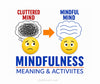
We have to spend some of our mental time debriefing the past to learn from it and making plans for the future. But if we want to be happy and have fulfilling relationships, we also need to spend some of our mental time in the here and now. That's what mindfulness is about.
Mindfulness isn't complicated. You can do it anywhere. It doesn't involve any special equipment or training. You don't have to sit a certain way or wear certain clothes.
What is Mindfulness?
Mindfulness is being present in the present.
It is simply paying attention to the present moment without judging it. It's about turning your focus to notice what you are experiencing now. It's awareness in the moment.
"Mindfulness isn't difficult. We just need to remember to do it." — Sharon Salzberg
Anyone, anywhere, at any age can be mindful in the moment. (While I was writing that sentence, I thought "Maybe not infants," but then realized that infants do it automatically. :)
Mindfulness can be used here and there to remind you to be focused on what you are experiencing. Repeated use of mindfulness exercises can help train your brain to be more disciplined and less distracted by worry about the future or rumination on the past.
Mindfulness Benefits
"Be where you are; otherwise you will miss your life." — Thich Nhat Hanh
Mindfulness gives you a mental breather. You can use it to reset when you are stressed, as a calming break you can fit into your daily routine, or as a discipline you work on.
Research has linked mindfulness to these benefits:
- reduced rumination (spinning stressed mind)
- reduced anxiety and depression
- improved working memory
- increased ability to focus
- less emotional reactivity
- improved stress resilience
- more relationship satisfaction
|
Two of my workbooks include mindfulness info and activities: |

Practicing Mindfulness
Mindfulness isn't necessarily another thing you have to fit into your day. It can just be a different way of experiencing the things you're already doing.
Mindfulness can be practiced by setting an intention to be mindful during certain activities while you’re going about your day, or by setting aside a little time to practice being mindful.
The basic concept is:
- Tune in to all your senses. What do you see, hear, taste, smell, and physically feel
- What are your thoughts related to the activity of focus?
For example, let's say you are mindfully washing the dishes. Rather than having your mind on the rest of your to-do list, or how mad you are about something, you focus on the sensation of washing the dishes. What does the water feel like? Is it hot or cold? What do the various dishes feel like when you handle them? What do you hear and smell? What are your thoughts about those sensations?
If your mind wanders, gently bring it back to the experience of washing the dishes.
You don't have to do it for the whole time it takes to do the task — it's totally up to you how long you want to do the exercise for.
Mindfulness Tips for Beginners
Mindfulness isn't about having a blank mind. It's about having a focused, calm mind.
When your mind wanders onto another topic during a mindfulness activity, that's OK. Just gently bring your mind back.
Let the thoughts float on through, like clouds gently floating across the sky or a leaf floating on a gently flowing stream or river. And bring your attention back to what you are doing now.
3 Super-Simple Mindfulness Activities
1. Paying Attention to the Now
Whatever you are doing at any given time, tune in to your surroundings.
Notice what’s around you: What do you see? Hear? Smell? Feel?
2. Physical Grounding
Tune in to points where your body makes contact with other things:
- your bottom on a chair
- your feet on the floor, sidewalk, or grass
- the touch of your clothes
- the movement of air on your skin
3. Mindful Deep Breathing
Deep breaths are great for helping you relax physically and mentally.
Take slow deep breaths in and out.
Notice how your body and mind respond to the deep breathing.
Notice what it feels like in your body ... what you hear ... what it feels like emotionally.
Deep Breathing Tips: 1) You may have to exhale first before you can take a deep breath in. 2) How to know when you’ve taken a deep breath: your abdomen rises as you breathe in.
🟢 ➜ If you want a more complex breathing exercise, I describe one in this post: How to Do 4-7-8 Breathing: Benefits, Instructions, and Tips
5 Ways to Add Mindfulness to Everyday Activities

4. Mindful Morning
Choose a part of your morning routine (brushing your teeth, taking a shower, shaving, washing your face...) to perform mindfully.
While you’re doing that activity, focus your attention on what it feels like physically, what you see, and the connected sounds, tastes, smells, and thoughts.
5. Mindful Chores
You can turn a relatively mindless activity like doing the dishes, standing in line at the store, or working in the yard into a mindful experience by being fully engaged with the activity.
Scan your body to note what you are feeling physically. Check in with the rest of your senses: what do you see, hear, taste, and smell? What are your related thoughts?
6. Mindful Time With Pets
Playing with pets, or even sitting with them quietly, can be a great stress reliever. You can increase the calming effect by focusing on the experience.
Notice your pet's movements, expressions, sounds, and the feel of its fur. And notice what you feel like during the interaction.
7. Mindful Time With Your Kids
Busy parents can be running from one task to another, distracted by their many responsibilities. Be intentional about focusing when you are spending time with your children, at least occasionally, possibly at some point daily.
Pay attention to the sights and sounds of what they are doing. What do you notice about them today, right now. And what do you feel like when you really pay attention to them and are with them, present.
8. Mindful Happy Moments
I call ordinary happy moments Small Smilables.
Notice when something small brings you happiness and savor the moment. Notice what it is, looks like, feels like. Make a smile grow as you take some time with it.

5. Either/Or Hybrids: Mindfulness Activities that Can be Structured or Spontaneous
Each of the next mindfulness activities has a version where you just do what you're already doing with a mindful twist, and another where you set up the exercise intentionally.
9. Mindful Eating
You can practice mindful eating during a meal or snack, or make it an exercise.
The typical mindfulness eating exercise goes like this:
- Get a piece of fruit (e.g., an apple, orange, or raisin).
- Really examine the fruit. Hold it in your hand, noticing the details of what it looks like and feels like.
- Smell it.
- If it’s a fruit that requires peeling, peel it slowly. Pay attention to the action of peeling it and the associated sights, sounds, and smells.
- Slowly eat the fruit. With each bite, notice the flavor, smells, and texture.
10. Mindful Listening
Spontaneous version: Stop at any time in your day and focus in on what you hear. Name it. What do you notice in relation to the sound? Pay attention to how you respond to it.
Structured Mindfulness Technique: Set up a listening activity, like listening to music, and really pay attention to the experience of the music. What instruments do you hear? How do the notes go together? What are the lyrics? What does the rhythm and beat feel like? What do you feel emotionally in connection to the music?
11. Mindful Walking
You can do this mindfulness activity anywhere: in your living room, walking down a hall or in a parking lot, or outdoors when you’re getting some exercise in nature.
As you walk, notice your body’s movements and the physical sensations of walking. Pay attention to:
- The general feeling of walking
- The movement of your feet, legs, arms, hands, abdomen, chest, neck, and head
- Your breath
Take in your surroundings. Notice:
- The sights, sounds, and smells
- What it feels like physically (e.g., the sun or breeze on your skin)
- What it feels like emotionally
12. Mindful Movement
I already mentioned mindful walking. In that case, you are taking in everything around you as well as the physical sensations of walking.
In this activity, really focus in on movement itself. It could be an athletic activity, such as running or throwing a ball. It could be jumping or dancing or just standing up and moving your arms from side to side.
Notice all the details of the movement and what it feels like.
13. Mindful Creative Activities
You don't need any special talent to do mindful creative activities. You can be young or old, or in-between.
These activities can be as simple as coloring or doodling. They can be more complex art forms, crafts, or skills.
Here are some examples:
- Coloring
- Drawing
- Woodworking
- Cooking
- Building
- Painting
- Sculpting
- Jewelry making
- Collaging
The possibilities are endless. Only limited by your time, interests, and opportunities.
If you are already doing the activity, what turns it into a mindfulness exercise is to notice the experience you are experiencing. The colors, textures, smells, physical sensations, sounds, and emotions connected to what you are doing.
2 Structured Mindfulness Activities
These are commonly taught mindfulness activities. Each is short. They are similar, but one is more complicated than the other.
14. See. Hear. Move. 3-3-3 Mindfulness Technique
This technique uses your senses to reset your mind and ground yourself in your body.
Take a couple of slow, deep breaths.
- Name 3 things you see.
- Name 3 sounds you hear.
- Move 3 body parts (e.g., arm, ankle, finger).
Take a couple of slow, deep breaths.
15. 5-4-3-2-1
This exercise involves your 5 senses: sight, touch, sound, smell, and taste.
Take a couple of slow, deep breaths.
- Name 5 things you see.
- Name 4 things you feel physically (e.g., the floor under your feet, warmth or cold on your skin, the clothes on your body, or something you can touch/hold).
- Name 3 sounds you hear.
- Name 2 things you smell.
- Name 1 thing you taste.
Take a couple of slow, deep breaths.
Note: Some people, especially on social media, suggest using this technique to help you relax when you are having a panic attack. I find it too complicated for that situation, but I do like it as a mindfulness activity for training your brain to slow down and focus.

🟢 ➜ You might also be interested in these posts:
- 15 Ways to Manage Stress and Reduce Anxiety
-
3 Quick Relaxing Meditations to Relieve Anxiety and Stress
-
Loving Kindness Meditation for Challenging Times
🟢 ➜ And these stress-resilience resources:

- Tags: anxiety relief mindfulness
- Ann Silvers






Comments 0