Best Protein Foods for Anxiety: Meat, Fish, and Plant Sources

Protein keeps your body going. It provides amino acids used to build muscles and other cells. When protein intake is too low, the body is placed under stress — and that can make it harder to manage stress overall.
A naturopathic doctor I interviewed when working on my book Feed Your Calm: Anti-Anxiety Anti-Stress Diet and Supplement Tips for Stress Resilience said that the first thing she asks an anxious client is, "Are you getting protein throughout your day?"
You wouldn't expect your car to run without fuel. Don't expect yourself to thrive without protein.
At a Glance
- Protein foods support stress resilience by providing amino acids, minerals, vitamins, and omega-3 fats
- Top sources include meat, fish, oysters, eggs, beans, and lentils
- Plant protein sources are typically most effective when combined for a complete amino acid profile
- Pasture-raised, wild-caught, and sprouting can offer nutritional advantages
- Collagen and gelatin could increase anxiety for two reasons
Key Nutrients in Protein Foods That Support Stress Resilience
Protein-rich foods provide more than just amino acids. Many also contain vitamins and minerals that play important roles in how the body responds to stress.
(Click on the links for posts where I explain more about each nutrient's research-backed mental health benefits.)
Amino acids
Protein is made up of chains of amino acids. Amino acids are the building blocks for your body's cells and for the neurotransmitters that influence mood, alertness, and relaxation.
A complete protein source, such as meat, provides all nine essential amino acids needed by your body. Most proteins found in plants are not complete. Vegetarians can consume complete protein profiles by mixing foods such as beans and rice.
While all the amino acids are important for anxiety relief and stress resilience, two standouts are tryptophan and glycine. They both help in the production of calming neurotransmitters and are important for relaxation and sleep.
B vitamins
The B vitamin complex includes a group of related nutrients such as B1 (thiamine), B9 (folate), and B12 (cobalamin).
B vitamins support brain function, energy production, and neurotransmitter activity.
Animal proteins generally contain all B vitamins, including B12. While plant protein sources can provide many B vitamins, they do not contain B12, so vegetarians need to obtain it through supplementation.
Zinc
This mineral plays a role in nervous system function and helps regulate key brain chemicals. Oysters make many top foods for anxiety lists because of their abundance of zinc. While meats are also a good source, I was surprised to find out that dark poultry meat has much more than the white meat.
Magnesium
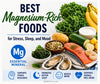
Magnesium is used in hundreds of chemical reactions in your body. You need it for dealing with stress, and you burn through it with stress. It supports relaxation, sleep, and healthy stress hormone regulation.
Omega-3 fats (EPA and DHA)
There are several different omega-3 fats available in foods. EPA and DHA are the ones we need to support brain health and help regulate inflammation and the stress response. These are the omegas found in animal sources such as fish, beef, and eggs.
Vitamin D
The sunshine vitamin plays a role in mood regulation and nervous system function. It has limited presence in foods, but eggs are one of the better sources if they are from hens that are allowed to roam outdoors and get sun exposure. Similarly, the vitamin D levels in wild-caught salmon are superior to those in farm-raised salmon.

Caution on Collagen and Gelatin
Before we look at my list of top stress-resilience protein sources, I want to take a minute to point out an important connection between anxiety and the protein in collagen and gelatin powders.
These foods should not be consumed without another food that provides tryptophan. Here's why:
- They have all the amino acids for a complete protein EXCEPT they are absent tryptophan.
- Researchers have found that providing people with protein shakes with this amino acid profile reliably creates anxiety in test subjects.
- Collagen and gelatin also have high levels of glutamate, which might increase anxiety.
If you use these powders, be sure to add other proteins — such as dairy, eggs, or meat — to the same meal so you get some tryptophan. Some collagen powder manufacturers add whey to their products to create a complete protein mix.
That does still leave a potential issue with the high levels of glutamate, so monitor to see if consuming these protein powders impacts how stressed you feel.
Eating Poultry, Beef, Pork, and Other Meats Can Boost Stress-Resilience
Meats are many people's primary source of protein. This category of foods includes poultry (chicken and turkey) and beef, pork, lamb, and wild game animals like elk and deer.
Poultry is a good to great source of these stress-resilience nutrients:
- a mix of amino acids (especially high in tryptophan and glycine),
- B vitamins, and
- zinc (dark meat).
Beef, pork, lamb, and game meats are good sources of:
- a mix of amino acids (including tryptophan and glycine),
- B vitamins, and
- zinc.
Fish Benefits for Anxiety
Wild-caught salmon, sardines, and herring are good to great sources of anti-anxiety fats, minerals, vitamins, and protein:
- EPA and DHA omega-3 fats
- magnesium
- Vitamin D3
- B vitamins
- a mix of amino acids (including tryptophan and glycine)
Fish can be one of the most beneficial protein sources for anxiety — but quality and contamination levels matter.
Addressing the Mercury Problem in Fish
A major problem with our current fish supply is that many species are highly contaminated with mercury. Among a multitude of other health problems, mercury has the potential to create anxiety symptoms.
The longer the fish has lived and the higher up it is on the food chain (big fish eat little fish), the greater its potential for high levels of mercury. I recommend wild-caught salmon, sardines, and herring because they have relatively high levels of omega-3s while they also have relatively low levels of mercury.
There are several online resources for checking the mercury contamination of different breeds of fish, i.e., the Natural Resources Defense Council (NRDC) chart about the relative mercury levels of different fish species.
Even though the fish I’ve listed are low in mercury compared to other fish, everyone should be mindful not to overdo fish consumption. Some is good, but more is not necessarily better because of the mercury. I think that we would all do well to adhere to the advice for pregnant women. The 2017 guidelines of the EPA (US Environmental Protection Agency) suggest pregnant women consume 8 to 12 ounces of low-mercury seafood per week.
When buying salmon, you should check that it is wild-caught because there are many potential problems with farm-raised fish. Farm-raised fish are often:
- fed GMO grains (so they are potentially ingesting herbicides like Roundup),
- given antibiotics because their unnatural, dense living conditions give rise to increased exposure and vulnerability to infection, and
- contaminated by PCBs, dioxins, and other toxic chemicals.
The fact that farmed salmon commonly have red dye added to their diet, or to their meat after they are harvested, attests to the unnaturalness of their life.
Nearly all Atlantic salmon are farm-raised. Most Pacific salmon are wild-caught.
Other Seafood for Anxiety: Oysters Deserve Special Mention

While researching for Feed Your Calm, I came across a psychiatrist so convinced of the anti-stress benefits of oysters that he serves them at his presentations.
Oysters are a good to great source of:
- zinc
- magnesium
- EPA and DHA omega-3 fats
- B vitamins
- a mix of amino acids (including tryptophan and glycine)
As far as seafood goes, oysters are relatively low in mercury contamination.
Oysters are so high in zinc that you should not overdo them. The Upper Limit (UL) for zinc is 40 mg. There is 30–50 mg in a serving of six oysters. That doesn’t mean that it’s awful to have more than six oysters at a sitting; just be mindful not to be doing that day after day. As with salmon, some is good, but more is not necessarily better.
Most oysters sold in the US are “farmed,” but farming methods are much different than for shrimp and fish.
Farmed oysters aren’t fed a concoction like farmed fish are. Farmed oysters eat plankton and nutrients from the seawater around them just as their wild counterparts do. They also aren’t living in high concentrations of waste material (poop) like captive crowded farmed fish, so there isn’t the need to deal with managing the negative effects of those wastes and thwarting the spread of infection throughout the colony with antibiotics.
In general, farmed oysters are exposed to much the same eating, chemical, and living conditions as if they were wild.
Pasture-Raised Eggs: How They Calm Anxiety
Eating eggs provides complete protein and other essential nutrients for combating stress. However, some egg benefits vary drastically with how they are produced. The welfare of poultry and the quality of eggs are influenced by farming methods.
Understanding different designations for eggs can be confusing. A class on nutrition and mood taught me that cage-free eggs aren't necessarily from chickens freely roaming outdoors like I pictured them. Even free-range doesn't mean the hens are roaming free.
🟢➜ I get into the difference between types of eggs and what egg labels mean in another post, Why Eat Pasture-Raised Eggs for Mental Health?
Eggs are a good source of:
- B vitamins and
- Mix of amino acids (including glycine and some tryptophan)
Pasture-raised eggs — but not eggs from indoor factory farms — are one of the few food sources of:
- Vitamin D3
Pasture-raised eggs are better than typical eggs from factory farms in many ways, including:
- more of the mental health target DHA and EPA omega-3s, and
- a better omega 6:3 ratio.
Plant Protein Sources for Stress-Resilience: Sprouted Lentils, Beans, and Grains

Legumes, such as lentils and beans, are a vegetable source of protein. they aren't a complete protein on their own, but you can get a full set of amino acids when these foods are combined with grains.
For vegetarians and others, sprouted lentils and beans are good to great sources of:
- magnesium,
- zinc,
- B vitamins, and
- amino acids (including tryptophan and glycine).
Quinoa is used similarly to rice in meal planning, but whereas rice is a grain, quinoa is a seed. It contains all 9 essential amino acids.
Sprouted brown rice has some amino acids. It's not a complete protein on its own, but this carbohydrate can be combined with sprouted lentils and beans to create a complete protein meal.
Rice and quinoa are good to great sources of:
- magnesium,
- zinc, and
- B vitamins.
Sprouting provides several benefits. It reduces anti-nutrient phytates, that can interfere with mineral absorption. It also increases certain nutrients, including B vitamins, and improves digestibility.
Sources of Sprouted Lentils, Beans, and Grains
You can buy sprouted lentils and sprouted beans (sprouted lentils are cheaper than sprouted beans), as well as sprouted quinoa and rice from some stores or online sources like Amazon.
You can sprout legumes and grains yourself in jars or use official sprouting trays.
There is some concern about bacteria growth during the sprouting process because of the warm, moist conditions, so wash your seeds before sprouting, take care throughout the sprouting process, and wash sprouts before cooking.
Other Foods That Support Anxiety and Stress Resilience
Protein foods are one part of a broader approach to supporting the body’s response to stress.
🟢➜ Explore my full list in this post: Best Foods to Reduce Anxiety and Stress Naturally
Understanding the Bigger Picture: Diet and Anxiety
Nutrition plays an important role in how the body responds to stress, but it’s often overlooked.
I explore this topic in more depth in my book Feed Your Calm: Anti-Anxiety Anti-Stress Diet and Supplement Tips for Stress Resilience.

Notes: The contents of this post should not be taken as medical advice. It is always advised to seek personal recommendations from your health providers. I may receive a small commission for products purchased through Amazon links, but it doesn't impact your cost or mention of the product.
- Ann Silvers


Comments 0