

What Foods Have Vitamin D? Separating Myth from Reality

Vitamin D is essential for your immune system, mood, and overall health — but when people try to get more of it, one of the first questions is:
“What foods actually contain vitamin D?”
The answer is more complicated than most people expect.
In this post, we’ll look at:
- The few foods that naturally contain vitamin D, and the impact of the way sources are raised or grown
- Which foods are fortified with vitamin D, and what that really means
- How the vitamin D in foods like mushrooms probably fall short of your expectations
Two Kinds of Vitamin D: D2 and D3
A major complication with getting enough vitamin D is that there are two forms of the vitamin:
- D2 (ergocalciferol)
- D3 (cholecalciferol)
Your body wants the D3 form.
D2 is less stable and not as effective at raising and maintaining vitamin D levels in your body.
Natural Sources of Vitamin D: Sunlight and Foods

The best source of vitamin D3 is sunlight.
A few foods contain vitamin D naturally, but they get tricky because animal sources give you D3 while plant sources, such as mushrooms, offer only D2. How much UV light exposure an animal or plant gets will greatly impact how much vitamin D it contains.
Some countries mandate the addition of vitamin D to certain foods.
What Foods Naturally Have Vitamin D3?
Foods that contain vitamin D3 naturally are limited to a couple of animal sources, including
- the oil of fatty fish like wild-caught salmon, herring, or sardines, and
- pasture-raised eggs. (Hens need exposure to sun to have vitamin D in their eggs, but hens on mass-production farms are kept indoors.)
Dramatic D Difference: Wild-Caught vs Farm-Raised Salmon
A 2007 Boston University Medical Center study into the vitamin D levels of farm-raised and wild-caught salmon is a great example of how much vitamin D levels can vary based on sourcing. The study results showed that:
- wild-caught salmon varied in D3 content from 500 to 1000 IU per 3.5 ounces, but
- farm-raised salmon had about 75% less than that: 70 to 300 IU.
Why Pasture-Raised Eggs are Better for Vitamin D

Like the vitamin D difference between farmed and wild salmon, eggs have different vitamin D levels depending on the way they are raised.
The amount of D3 in eggs varies with the amount of time the hens spend in daylight. A medium-sized pasture-raised egg has about 140 IU of vitamin D. That's about a quarter of the 600 IU daily recommendation for most adults.
A German study using three groups of hens, with thirty hens in each group, found that hens given at least some freedom to be outside created eggs with 3 to 4 times more D3 than hens raised in the typical industrial farm method of being kept entirely indoors. More time outdoors resulted in more D3.
The study determined that it wasn’t the mere fact of hens being offered a door for potential outside access. Conditions, such as feeding location and size of roaming area, had to be correct to encourage the hens to spend time outside.
I explain what the various labels for eggs — cage-free, range-free, pasture-raised, organic — actually mean and guidelines for how to choose which are best for your family in this post: Why Eat Pasture-Raised Eggs for Mental Health?
What About Mushrooms for Vitamin D?

First: The idea that mushrooms are a good dietary source of vitamin D, bouncing around the internet, is largely misleading. You’re unlikely to get meaningful amounts from typical grocery store mushrooms.
Two factors get in the way of the average mushroom providing you with the vitamin D you need:
- Mushrooms may contain D2 (not D3)
- They only contain D2 if they are exposed to UV light from the sun or special lamps while they are growing or after they are harvested
Most commercial mushrooms are grown in the dark or shade, and contain negligible vitamin D.
Two types of mushrooms, portabella and maitake, stand out as possible sources of D2.
The Beltsville Human Nutrition Research Center in Maryland studied the vitamin D content of mushrooms sampled from a variety of producers across the US. They included mushrooms that were and were not purposefully exposed to light to boost vitamin D.
Here's the D2 amounts they found in 100 g (3/4 cup) of portabella mushroom:
- Not exposed to UV light: ≈10 IU
- Exposed to UV light: ≈ 450 IU
The study also showed that, in general, all types of mushrooms not purposefully exposed to UV light with the goal of boosting vitamin D have only small amounts to offer.
The Bottom Line:
Because commercially farmed mushrooms are typically grown indoors in the dark, most mushrooms you buy in the store will not be a good source of vitamin D.
While some mushrooms can become a good source of D2 with light exposure, that still leaves the issue of how well your body uses D2 given that what it really needs is D3.
What Foods Have Vitamin D Added?

Because so few foods contain vitamin D naturally, many countries add it to certain products to boost intake.
List of foods fortified with vitamin D around the world:
- Cow's milk – Commonly fortified in the U.S., Canada, Finland, Sweden, Norway, Australia, and parts of the Middle East. Also encouraged or practiced in some Asian countries.
- Cheese – Occasionally fortified in the U.S., Canada, Finland, and some EU countries.
- Plant-based milks (soy, almond, oat, rice) – Often fortified in the U.S., Canada, U.K., Australia, New Zealand, Nordic countries, and increasingly in India, China, and Middle Eastern countries.
- Margarine and spreads – Fortification is mandatory in Canada, Finland, Denmark, South Africa, and historically so in the U.K.. Still common in the U.S., Sweden, Norway, and several EU countries.
- Breakfast cereals – Widely fortified in the U.S., Canada, U.K., and Australia. Also found in South Africa, India, and parts of Europe as part of voluntary or encouraged programs.
- Orange juice – Fortified in the U.S. and Canada, particularly popular in brands targeting vitamin D intake. Not commonly fortified in most other countries.
- Yogurt – Sometimes fortified in the U.S., Canada, Finland, and Australia, especially when marketed as high-calcium or bone health–supporting.
- Infant formula – Fortified globally, per WHO and national health agency requirements. Fortification with vitamin D is standard across countries, including U.S., EU nations, Canada, Australia, India, and China.
Do Foods Fortified with Vitamin D use D2 or D3?
There is a mixture of mandates about what form of vitamin D needs to be used when fortifying food products. Most countries and brands lean toward D3, but it isn't always the case.
Check labels if you are interested in using fortified foods as your source of the vitamin.
How Much Vitamin D Do You Need?
US Recommended Dietary Allowances (RDA) for vitamin D are given in two ways: IU (International Units) and μg (micrograms). Each number is given in amounts recommended per day to maintain a healthy level.
RDA for women and men:
- under 70 years old: 600 IU/day, 15 μg/day
- over 70: 800 IU/day, 20 μg/day
Compare that to some of the best food sources of vitamin D3:
- Wild-caught salmon: 400 IU/3 ounces
- Sardines or herring: 160 IU/3 ounces
- Pasture-raised eggs: 140/medium
Even these top sources fall short of meeting daily needs without regular, consistent intake.
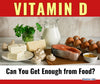
Can You Get Enough Vitamin D from Food Alone?
For most people, the answer is no.
Even the best food sources provide relatively small amounts, and many commonly consumed foods contain little to none.
This is why sunlight exposure — and often supplementation — plays a much larger role in maintaining healthy vitamin D levels.
🟢➜ For a complete guide to vitamin D benefits, dosage, and how to optimize your levels, see: The Sunshine Vitamin: D3 Benefits, Sources, and Dosage.
Take a Deeper Look at Diet, Supplements, and Mental Health
Vitamin D is just one piece of the bigger picture when it comes to nutrition and mental health.
In Feed Your Calm: Anti-Anxiety Anti-Stress Diet and Supplement Tips for Stress Resilience, I walk through how nutrients, food choices, and supplements work together to support mood, reduce anxiety, and build stress resilience.
The book covers:
- Key nutrients that impact anxiety and mood
- Practical ways to improve your diet without overwhelm
- How to think about supplements in a realistic, effective way

- Ann Silvers





Comments 0